
Singapore’s Orchid Diplomacy: A Floral Tribute to Leaders
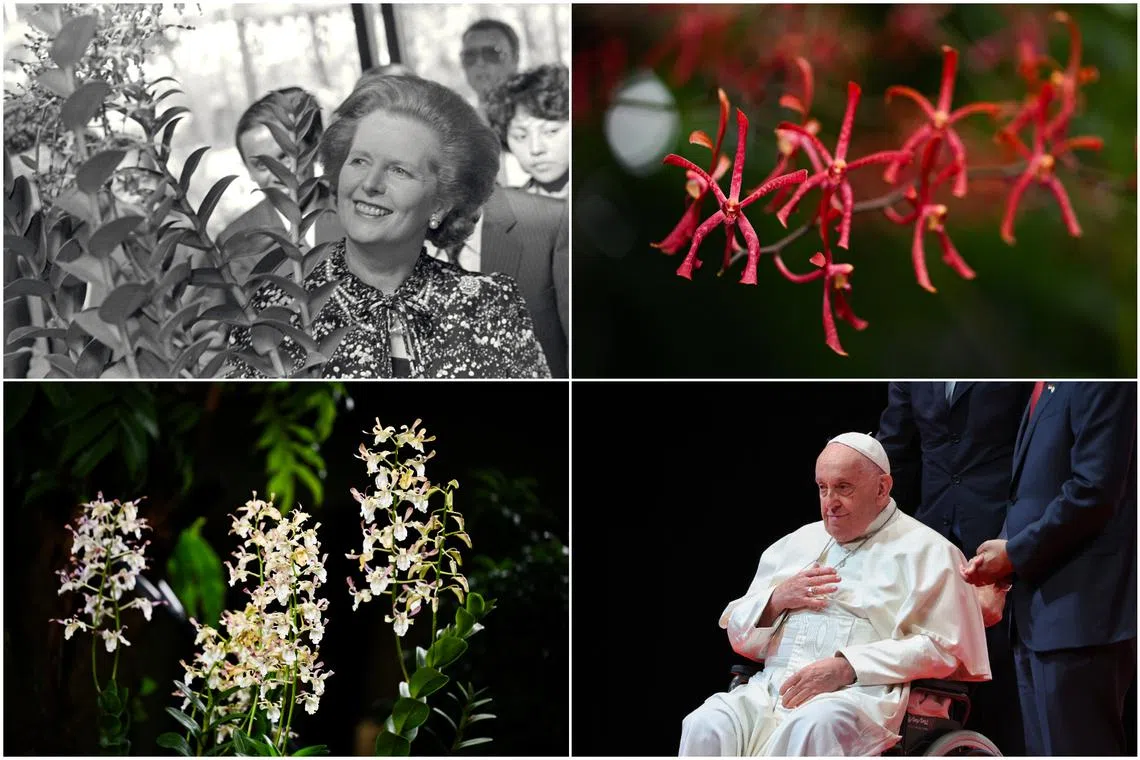
In a memorable moment from 1985, then British Prime Minister Margaret Thatcher was photographed with an orchid that bore her name, which had been selected for its vigor and growth potential. This unique hybrid, a result of breeding with a New Guinea orchid known for its remarkable qualities, was named Dendrobium Margaret Thatcher. The choice was explained by Singapore’s parks and recreation commissioner at the time, highlighting the country’s commitment to honoring significant figures through the art of orchid cultivation.
Thatcher is one of many notable figures to receive such a tribute; Singapore boasts over 280 orchid hybrids named after international dignitaries and significant events. This initiative, often referred to as orchid diplomacy, stands as the most extensive of its kind globally, serving as Singapore’s answer to other nations’ soft power strategies, such as China’s panda diplomacy. Local author Koh Buck Song, who penned a book on this subject, emphasizes the unique scale and execution of Singapore’s approach to this practice, which also finds parallels in Indonesia’s orchid naming and the incorporation of tulips and cherry blossoms in the foreign relations of the Netherlands and Japan.
Koh points out that while the Ministry of Foreign Affairs typically focuses on hard power considerations—such as economic metrics and trade agreements—soft power, embodied in initiatives like orchid diplomacy, plays a crucial role in a country’s branding. He categorizes orchid diplomacy firmly within this realm of influence.
However, not all foreign dignitaries are honored with an orchid. Historically, many recipients of these named hybrids were not world leaders. The Singapore Botanic Gardens initiated its orchid hybridization program in 1928, with the first notable hybrid named in 1956 after Lady Anne Black, the wife of a former British colonial governor. This crimson orchid, known as the Aranthera Anne Black, set a precedent for honoring prominent figures, a trend that predominantly featured women in the early years.
In the post-independence period, orchid-naming ceremonies became common, with many honorees being the spouses of visiting dignitaries. By 1978, reports indicated that 36 hybrids had been named after these women, reflecting the societal norms of the era where gardening was often associated with femininity. Over the years, notable names such as Imelda Marcos, the wife of the former Philippine president, and Hazel Hawke, the spouse of the former Australian prime minister, have been added to this list.
The first female heads of state, Sirimavo Bandaranaike of Sri Lanka and Indira Gandhi of India, were also honored with orchids during their visits to Singapore. Typically, while male leaders engaged in discussions about diplomatic relations, their wives participated in the symbolic act of orchid photography.
The practice of naming orchids began to evolve in the 1980s, with a notable change occurring when Japan’s Crown Prince Akihito received a hybrid named after him in 1981, following the earlier naming of an orchid for his wife, Princess Michiko. Joint naming ceremonies became increasingly popular, with examples including a dark red orchid chosen in 1999 by Madam Lao An and her husband, then Premier Zhu Rongji of China, and a purple orchid named for U.S. Vice President Joe Biden and his wife Jill in 2013.
Today, orchid diplomacy is predominantly reserved for heads of state or royalty, according to Ms. Ang Qing Yu from the Ministry of Foreign Affairs. She notes that it represents Singapore’s soft power and reflects how diplomatic practices have evolved over time. This tradition extends to a range of recipients, including royals like King Mswati III and celebrities such as Jackie Chan and Serena Williams.
Orchid hybrids have even been named after organizations like the World Trade Organization, showcasing the breadth of Singapore’s diplomatic efforts. One notable flower, the Papilionanda Asean Golden Jubilee, was created to commemorate the 50th anniversary of ASEAN in 2017.
While the National Parks Board (NParks) did not disclose a comprehensive list of VIP orchid hybrids, they confirmed that not all hybrids have been developed through their program. Mr. Harold Johnson, co-author of a book on Singapore’s national flower, noted that while the orchid naming practice is distinctive, many recipients may forget about their orchids unless they are avid growers.
Historical anecdotes illustrate the complexities involved in orchid naming. For instance, during a state dinner in 2016, Prime Minister Lee Hsien Loong made a lighthearted remark about the Dendrobium Barack and Michelle Obama, referencing conspiracy theories about the President’s birthplace, leading to laughter among guests. Conversely, British Prime Minister David Cameron’s orchid naming became a source of ridicule due to its color resembling that of a rival political party.
The evolution of orchid diplomacy reflects a shift in protocol, with the Ministry of Foreign Affairs now consulting visiting countries regarding naming preferences and color choices. For the upcoming 2024 visit of Pope Francis, extensive planning involved discussions about the desired white orchid. The unveiling of the Dendrobium His Holiness Pope Francis during a live-streamed ceremony marked a significant moment in this diplomatic tradition.
Koh notes that the dedication of orchids to leaders from seemingly minor states underscores Singapore’s active engagement in international forums. The creation of these hybrids is not a straightforward task; it typically requires two to five years from initial breeding to the point of maturity for presentation.
Mark Choo, an assistant curator at the National Orchid Garden, emphasizes the blend of science and artistry in developing these hybrids. As Singapore celebrates triple milestones in 2025—its 10th anniversary as a UNESCO World Heritage Site, the National Orchid Garden’s 30th anniversary, and the 150th anniversary of the Singapore Herbarium—visitors can enjoy the Singapore Garden Festival Orchid Show.
Creating hybrids is a meticulous process, with many seedlings failing to thrive due to various environmental factors. At any time, there are about 50 hybrids in development, with only a few flowering specimens deemed suitable for naming. This rigorous selection process ensures that only the most vibrant and distinctive orchids are honored.
Despite the significance of orchid diplomacy, this practice represents only a fraction of Choo’s work. He prefers to engage in hybrid breeding when he has the solitude of the late day. The intricate process requires a balance of creativity and scientific rigor, pushing the boundaries of what is possible in orchid breeding.
Most VIP orchids remain in Singapore, but rare occasions arise when they find homes abroad, such as the Dendrobium Kishida Fumio, which was named after the Japanese Prime Minister in 2022 and later bloomed in Hiroshima Botanical Garden. The logistics of transporting these delicate flowers are complex, requiring careful documentation to meet international phytosanitary standards.
Choo recalls traveling with the Dendrobium Barack and Michelle Obama to the U.S., noting the challenges of ensuring the orchids were treated with care during the journey. While these VIP hybrids may receive special treatment, they often do not travel in business class.
Following their ceremonial presentation, orchids typically have a lifespan of four to ten years, after which their vigor diminishes. To preserve these hybrids, NParks employs cloning techniques, a lengthy process that can take years but aids in maintaining the genetic material for future generations.
Orchid diplomacy is just one facet of Singapore’s broader cultural diplomacy. Celebrities and dignitaries, including Lady Gaga and French President Emmanuel Macron, have enjoyed local cuisine during state visits. Additionally, Singapore has honored figures like Nelson Mandela with tree dedications as part of its Tree of Fame initiative, focusing primarily on male leaders.
The enduring appeal of orchids mirrors the success of other soft power initiatives worldwide. The recognition of the Vanda Miss Joaquim as Singapore’s national flower has solidified its status as a national emblem. Dr. Yu Hao from the National University of Singapore describes Singapore’s orchid diplomacy as a creative and impactful strategy for fostering international goodwill.
This unique honor of having an orchid named after oneself is a rare experience, as expressed by former First Lady Laura Bush during her visit to Singapore. In a poignant moment, Indonesian President Prabowo Subianto requested that his orchid be named in memory of his late mother, resulting in the Paraphalanthe Dora Sigar Soemitro.
Orchids have a “multiplier effect,” serving as a powerful branding tool that can enhance Singapore’s international reputation. For orchid breeders like Choo, the joy of gifting these floral tributes lies in their ability to create happiness among world leaders.
Event Information
Where: National Orchid Garden, Singapore Botanic Gardens, 1 Cluny Road
When: July 19 to 27; 8:30 am to 7:00 pm daily (last admission at 6:00 pm)
Admission: Free for Singapore residents; $15 for non-residents


